Spa-Francorchamps rarely delivers a straightforward race, and over twelve hours in the Ardennes, that proved true once again. At 7.004km, with high-speed commitment and constant elevation change, it places relentless demands on both car and driver. What unfolded across the weekend was not defined by a single moment, but by sustained pressure, shifting conditions, and a race that rewarded those who could maintain control over time.
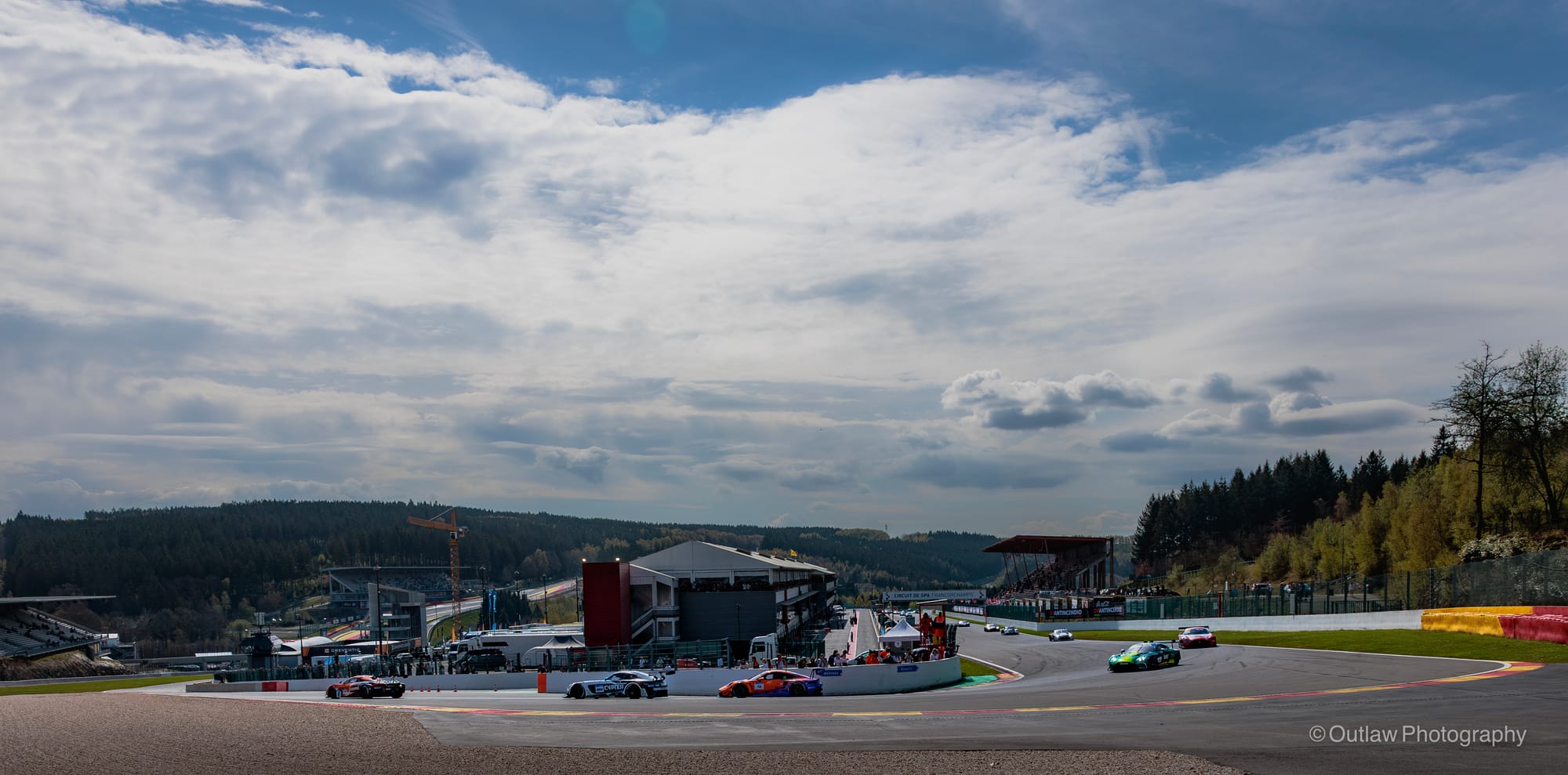
From the outset, it was clear this would be a test of more than outright pace. Strategy, discipline, and adaptability would shape the outcome, and while many contenders showed speed, only one team consistently combined all three when it mattered most. The weekend began calmly. Practice and qualifying ran in dry, mild conditions at around 16°C, with only a light breeze across the circuit. It allowed teams to focus on execution, but that early control would prove misleading.
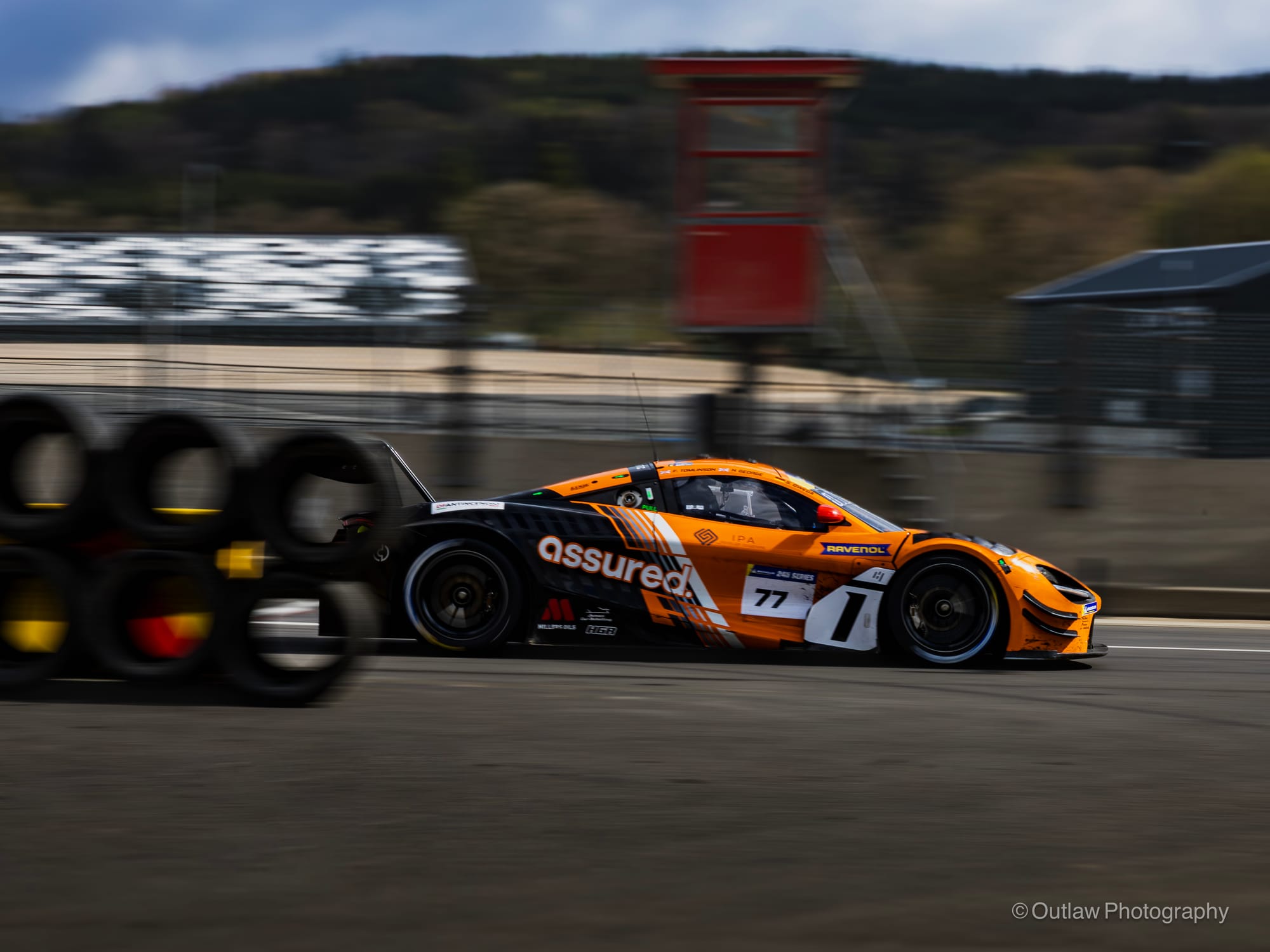
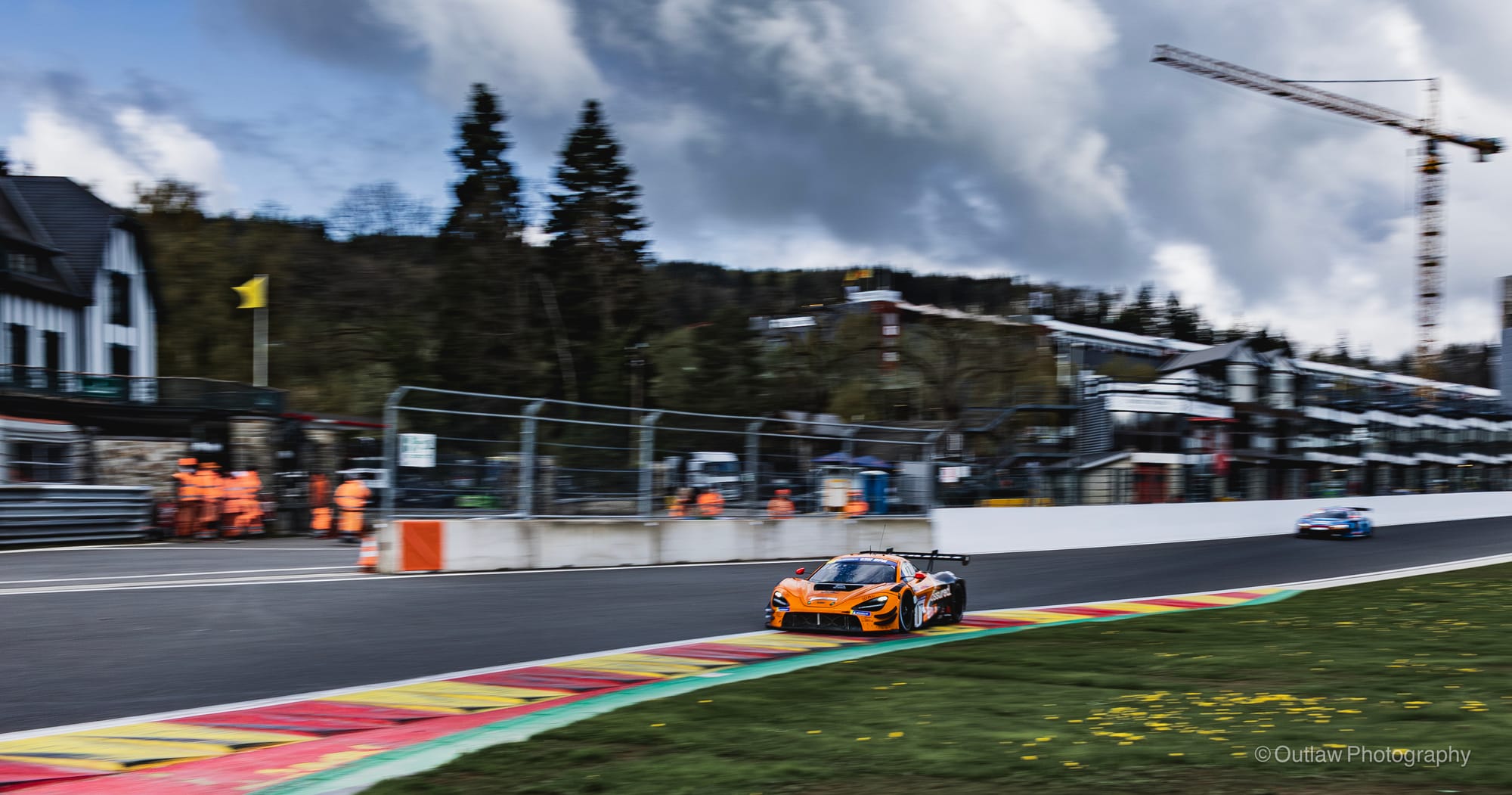
Qualifying followed the familiar six-session format, split across classes, with GT3 teams required to run their amateur drivers first. It immediately added pressure, especially at a circuit where confidence is everything. At the front, Optimum Motorsport delivered. Their #77 McLaren produced a 2:15.534 lap to secure pole, a clean, committed effort that set the tone heading into the race.
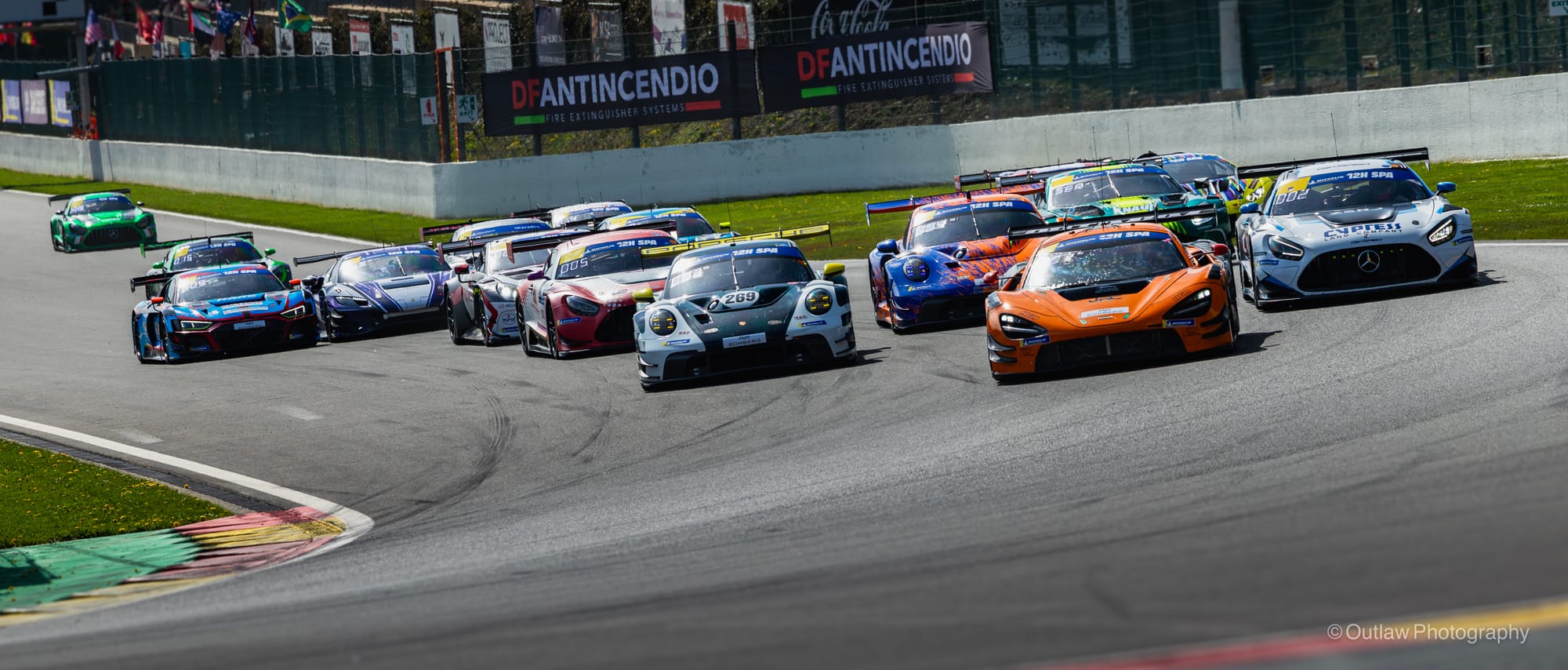
Saturday began in similarly controlled fashion. A rolling start saw 39 cars take the grid, with one starting from the pit lane. But Spa wasted little time reminding the field of its demands. Into La Source on the opening lap, a Lamborghini locked up under braking, clipping the tyre barrier before sliding across the gravel toward the photographers’ position. It escaped without serious damage, but it was an early warning.
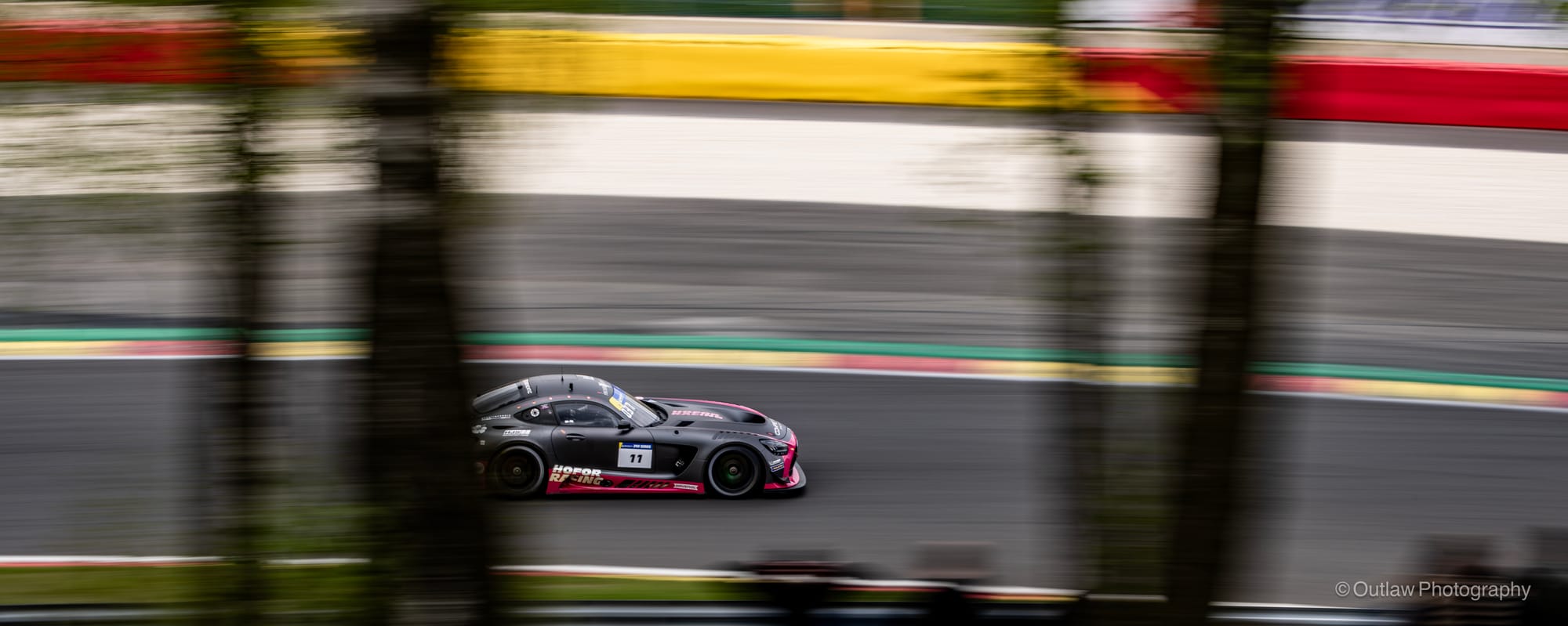
That tone carried into the opening hour. Hofor Racing encountered an early issue, nursing their car back to the pits with a loss of power steering. At the front, three lead changes in the first hour underlined just how competitive the GT3 field was, before the first Code 60 interruption broke the rhythm.
From there, the race began to fragment.
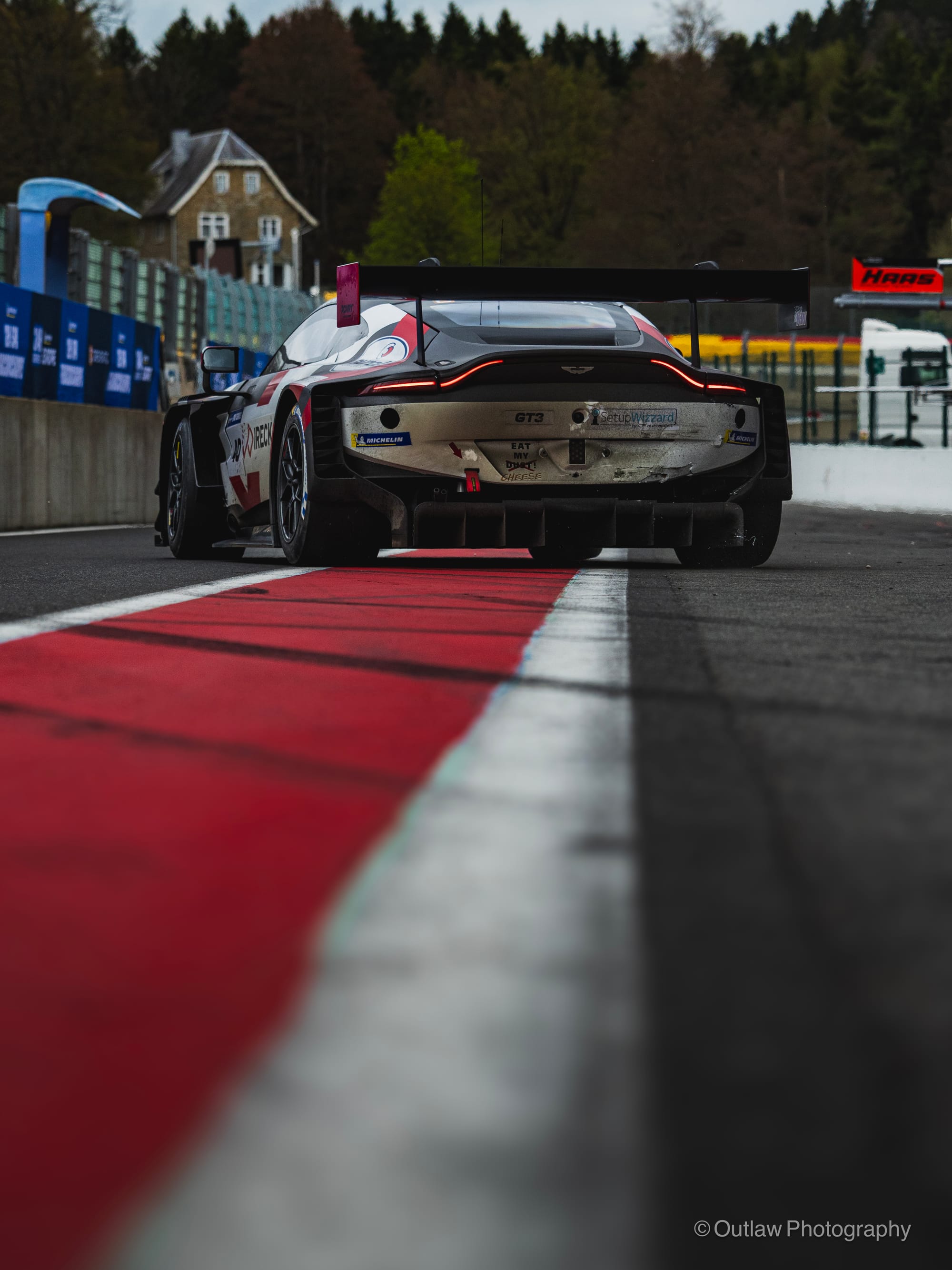
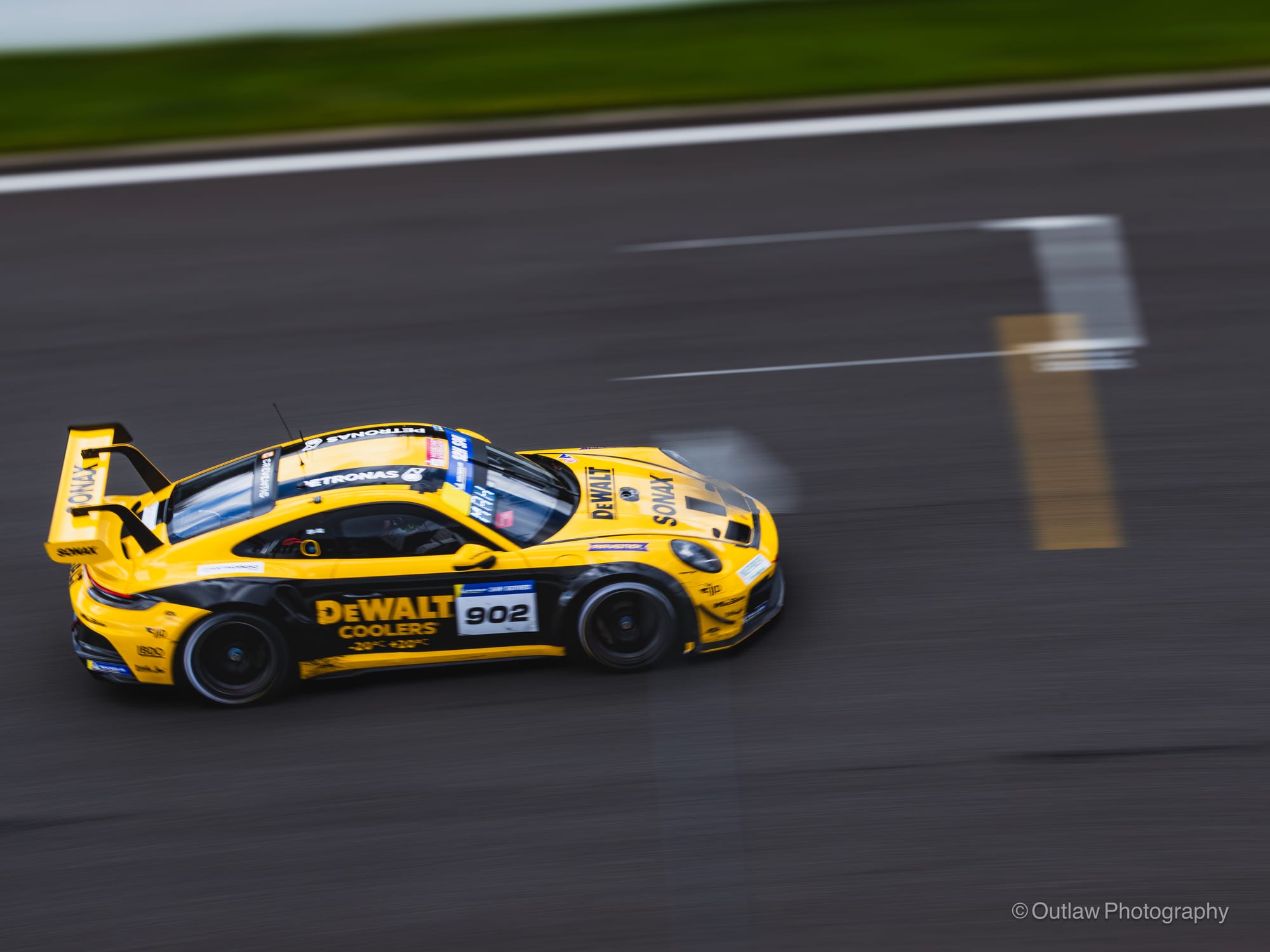
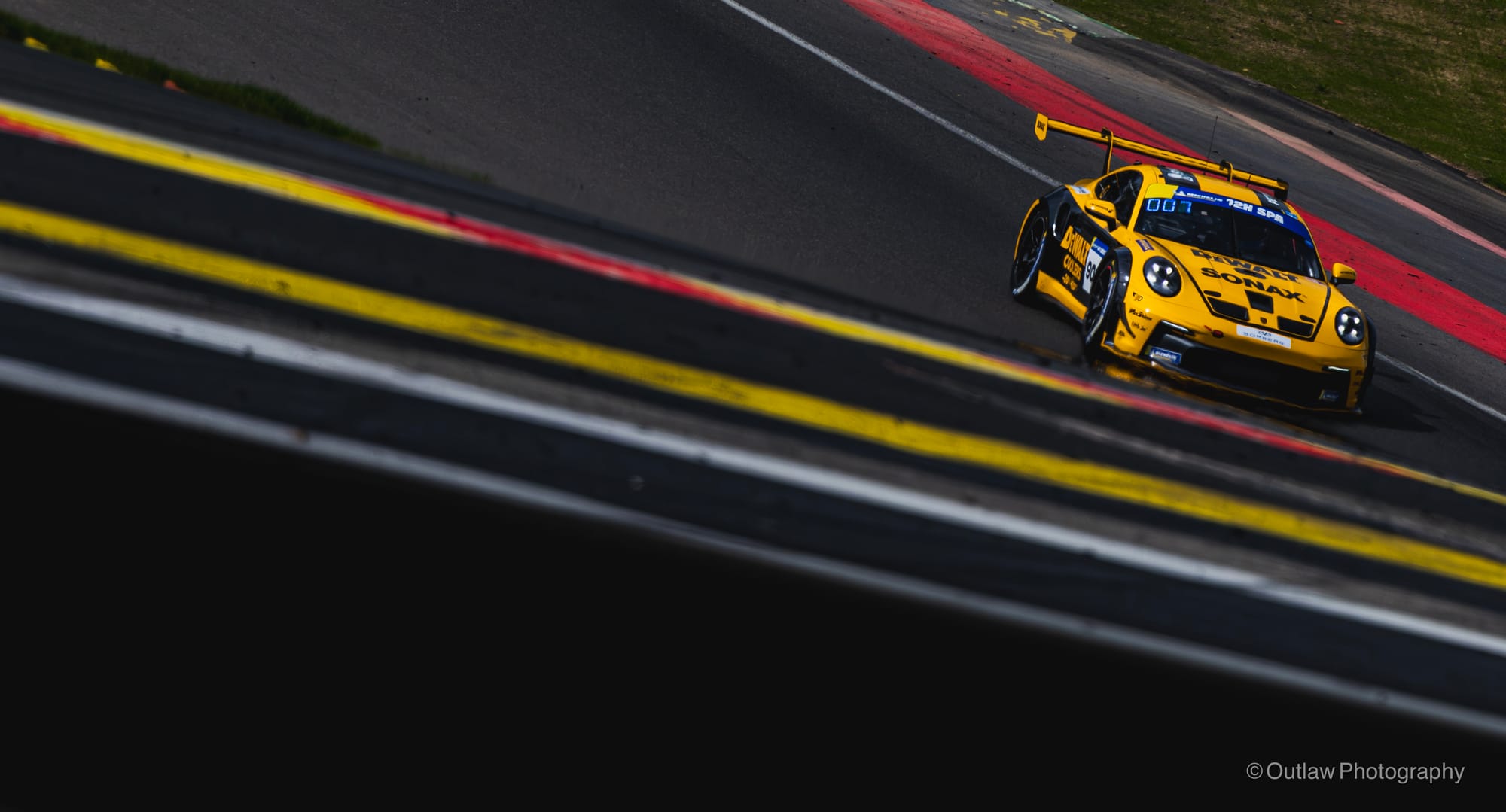
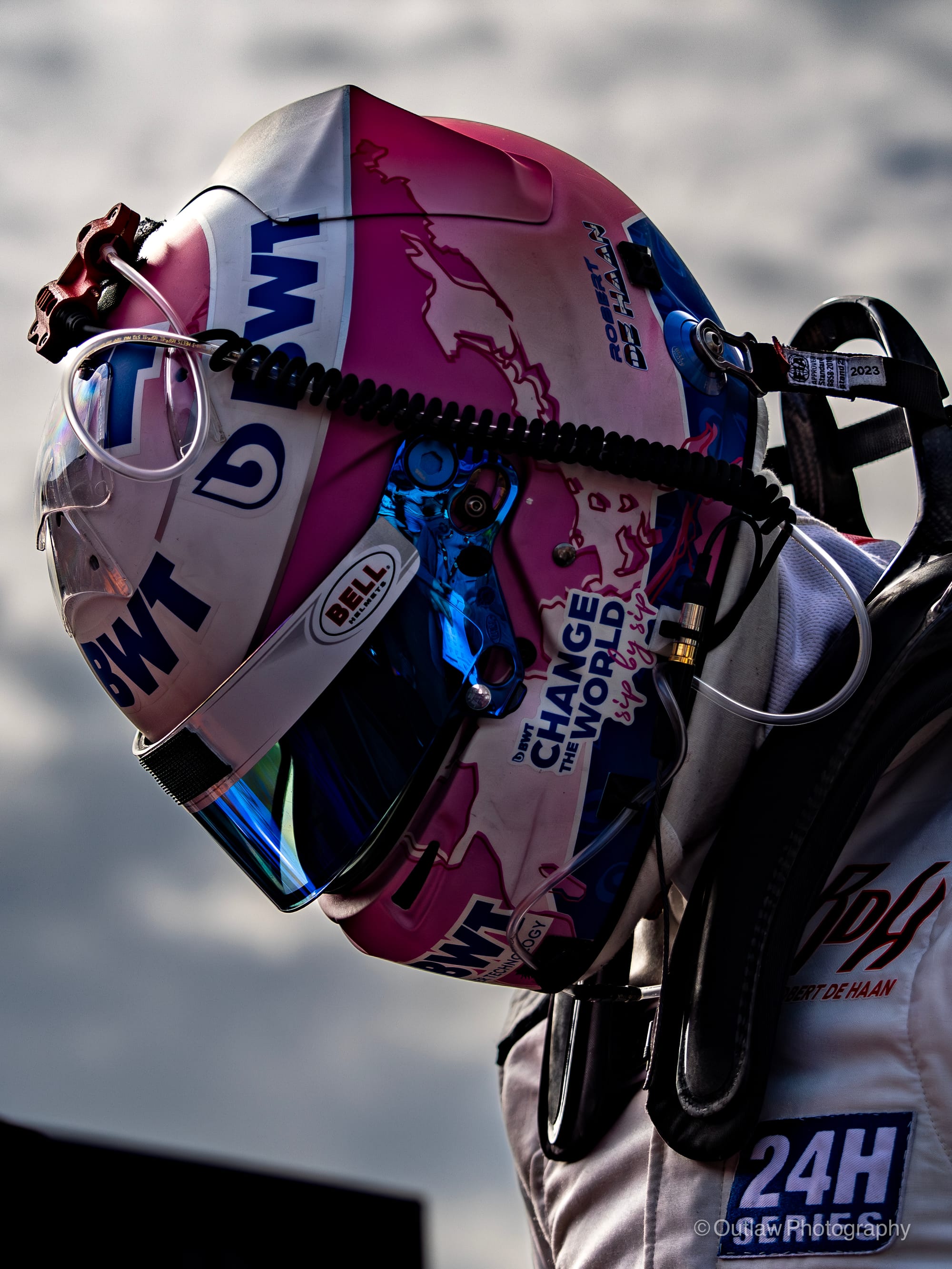
Comtoyou Racing’s #40 Aston Martin, driven by Tom Coronel, took control early on, closely followed by Proton Competition’s #73 Porsche of R.D. Haan. That order quickly evolved. A spin for the #935 Crubilé Sport entry triggered another Code 60, and by lap 20 Haan had surged into the lead, driving assertively against the Aston Martin.
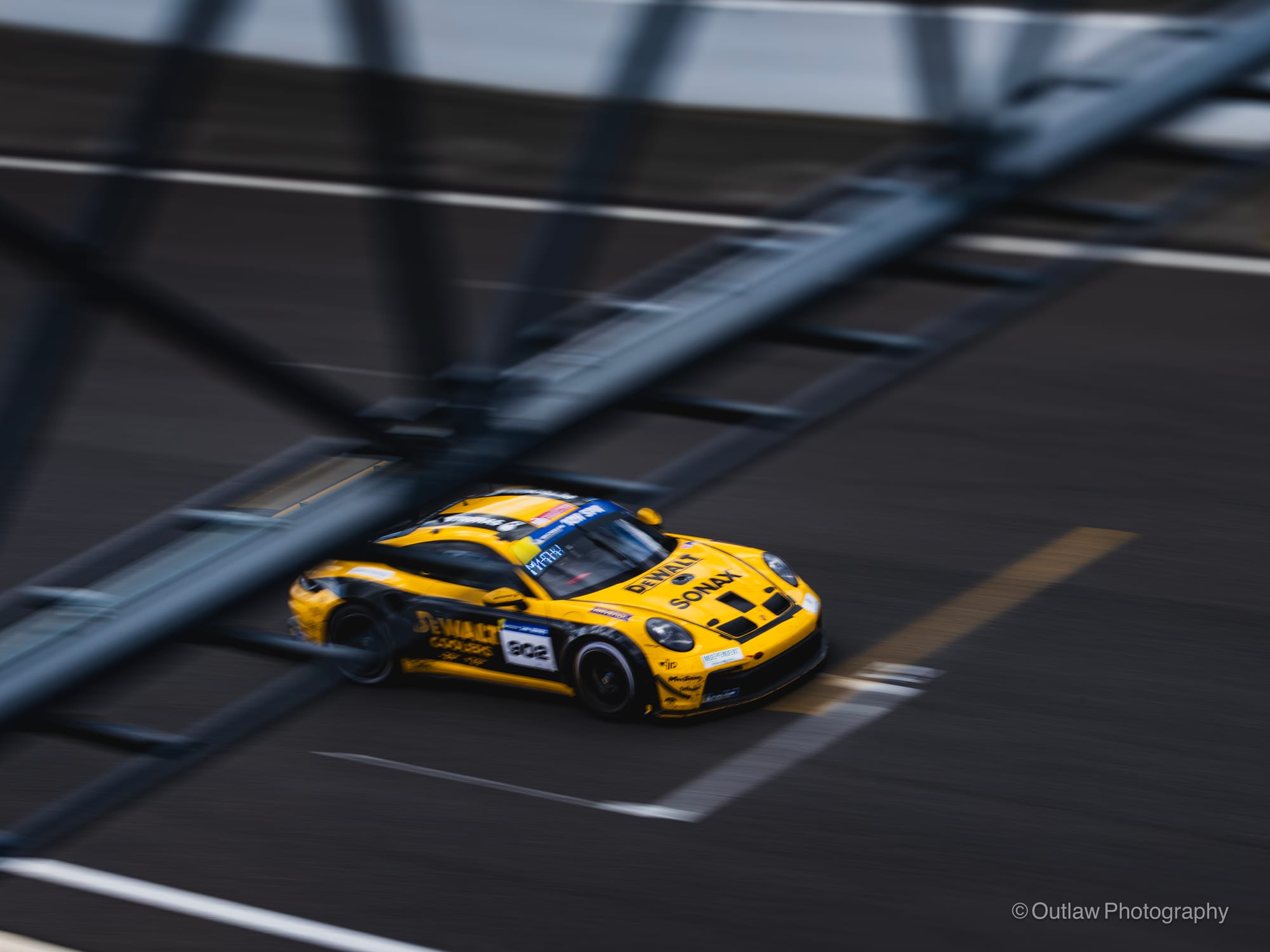
But even at this stage, it was clear that the race would not be decided purely on pace. The #702 Vortex received a penalty for pit stop infringements, while the #93 Redant Racing car of Ajith Kumar found the gravel shortly after a stop, likely caught out on cold tyres. Extracted and able to continue, it added to a growing pattern.
Interruptions became the defining feature of Saturday. By the time the #928 HRT Performance Porsche suffered a high-speed off, the race had already seen its sixth Code 60 with hours still to run.
And yet, at the front, a different story was developing.
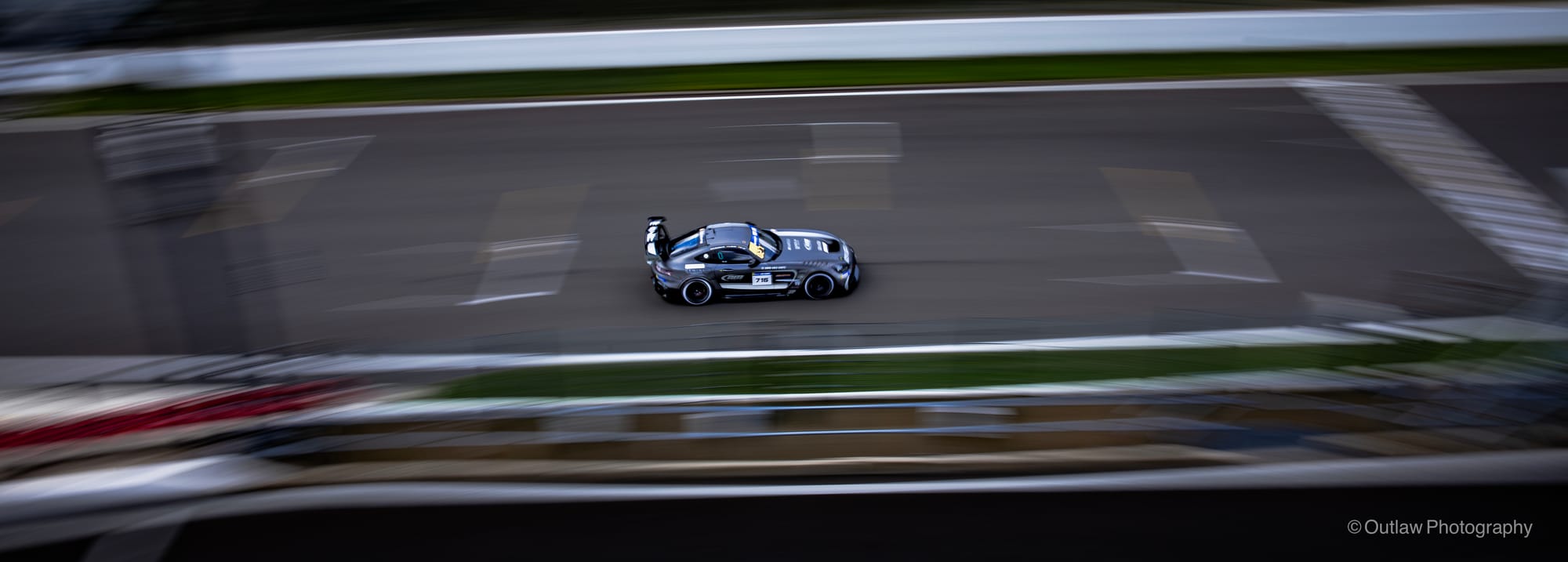
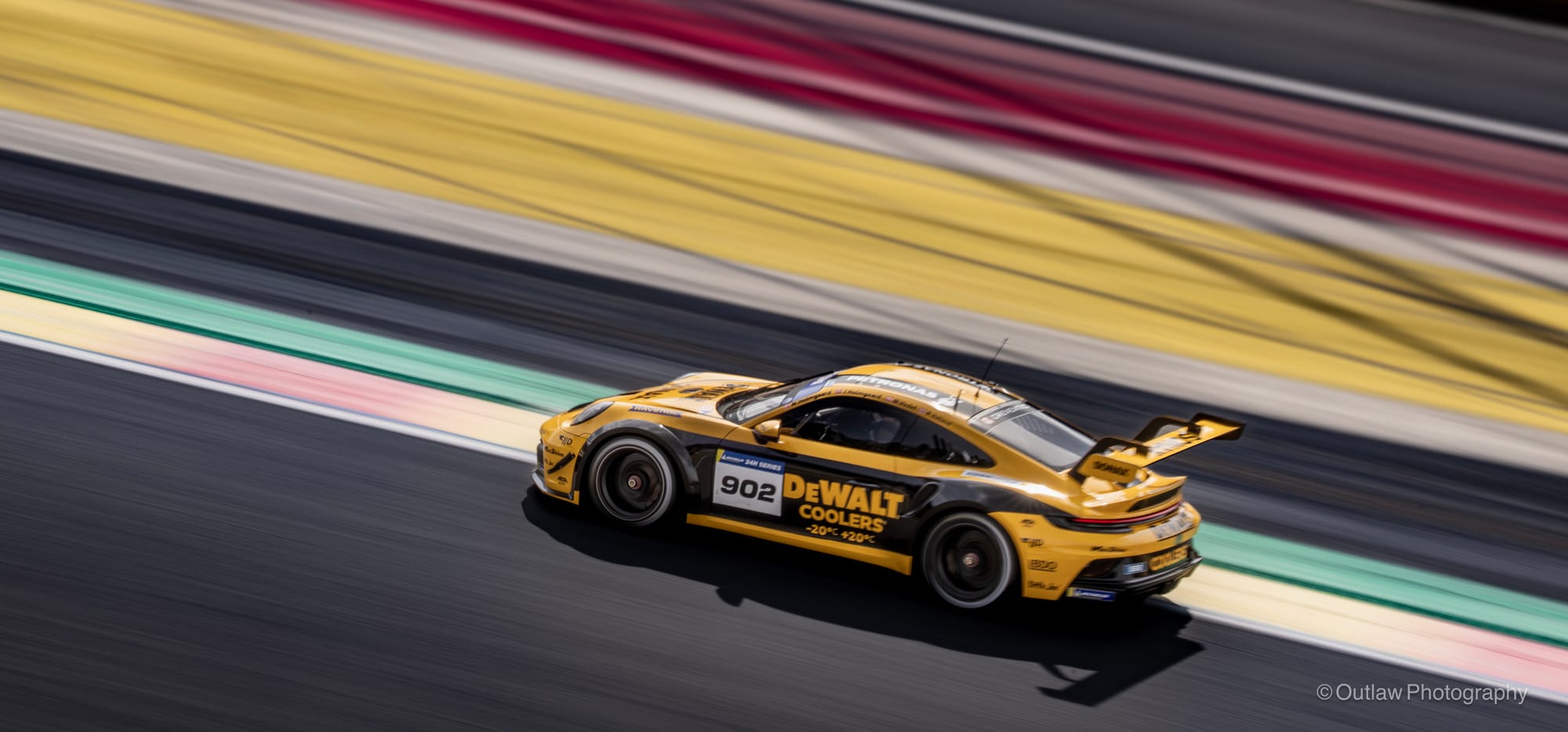
Herberth Motorsport held the lead with three and a half hours remaining, with Optimum Motorsport’s McLaren close behind. The constant changes at the top were less about wheel-to-wheel battles and more about pit cycles and refuelling strategies. Cars rotated through the lead as stops and driver changes played out, masking a more consistent group of contenders underneath.
Comtoyou Racing returned to the front by lap 55, before Optimum again moved into the lead with two and a half hours to go. It was a phase defined by timing and execution rather than outright speed.
As the race entered its later stages, the pressure began to show.
The #29 Pellin Racing Ferrari spun into the gravel at Bruxelles, while track limits penalties began to accumulate. A major moment followed at Blanchimont, where the Era Motorsport Ferrari of Dwight Merriman went off at high speed, sustaining heavy rear-end damage and retiring from the race.
Herberth Motorsport’s #269 Porsche, once a contender, saw its race unravel further with another trip into the gravel, compounding earlier issues.
Then came the defining moment of Saturday.
With just 40 minutes remaining, Comtoyou Racing appeared to have seized control, leading multiple GT3 classes. That changed quickly. A 60-second penalty for overtaking under Code 60 conditions applied immediate pressure, and moments later the #40 Aston Martin locked up heavily into Bruxelles. With smoke pouring from the tyres, the car slid across the gravel and into the barrier. The severity suggested a possible ABS issue, and the resulting damage ended what had been a strong run.
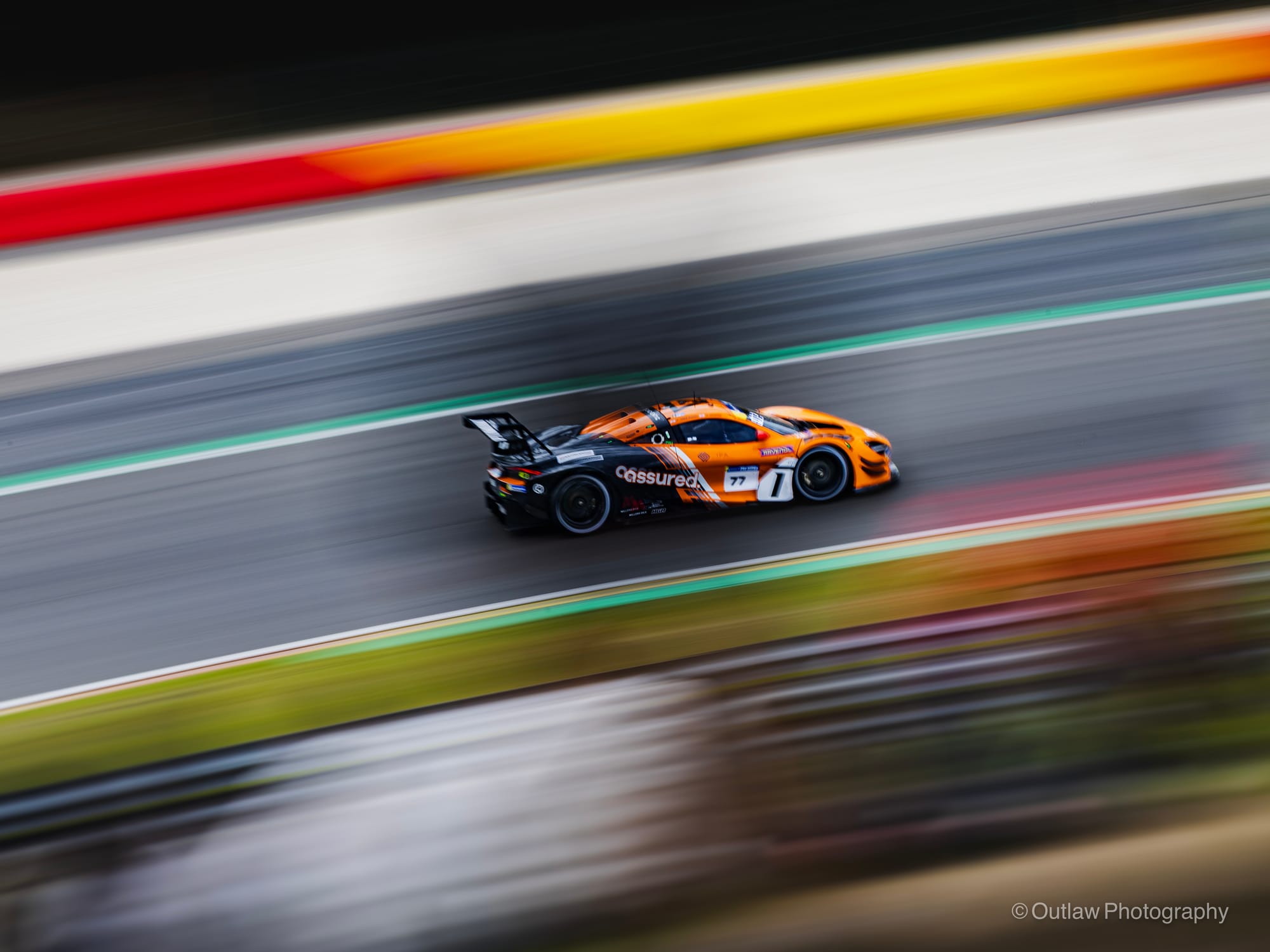
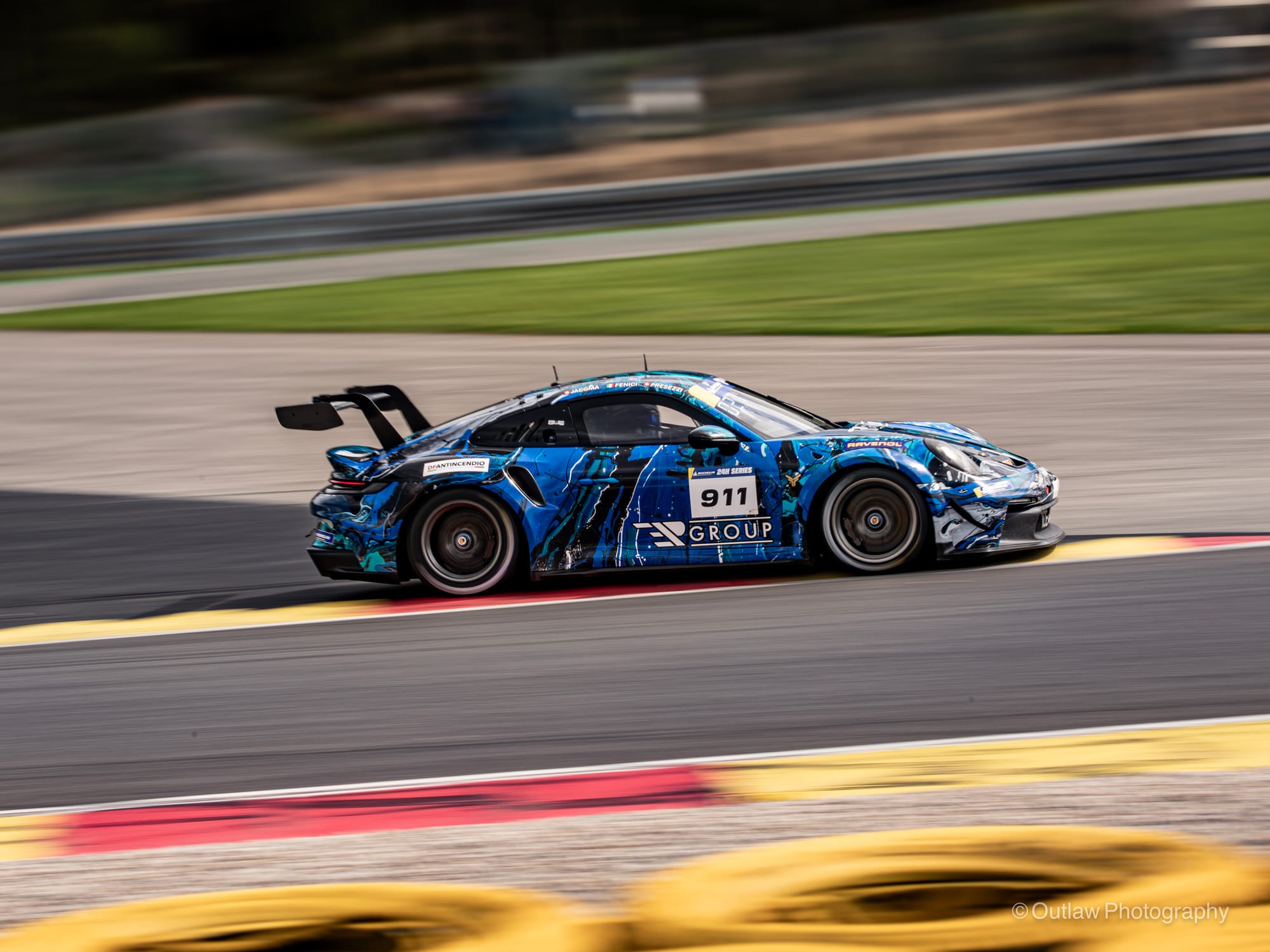
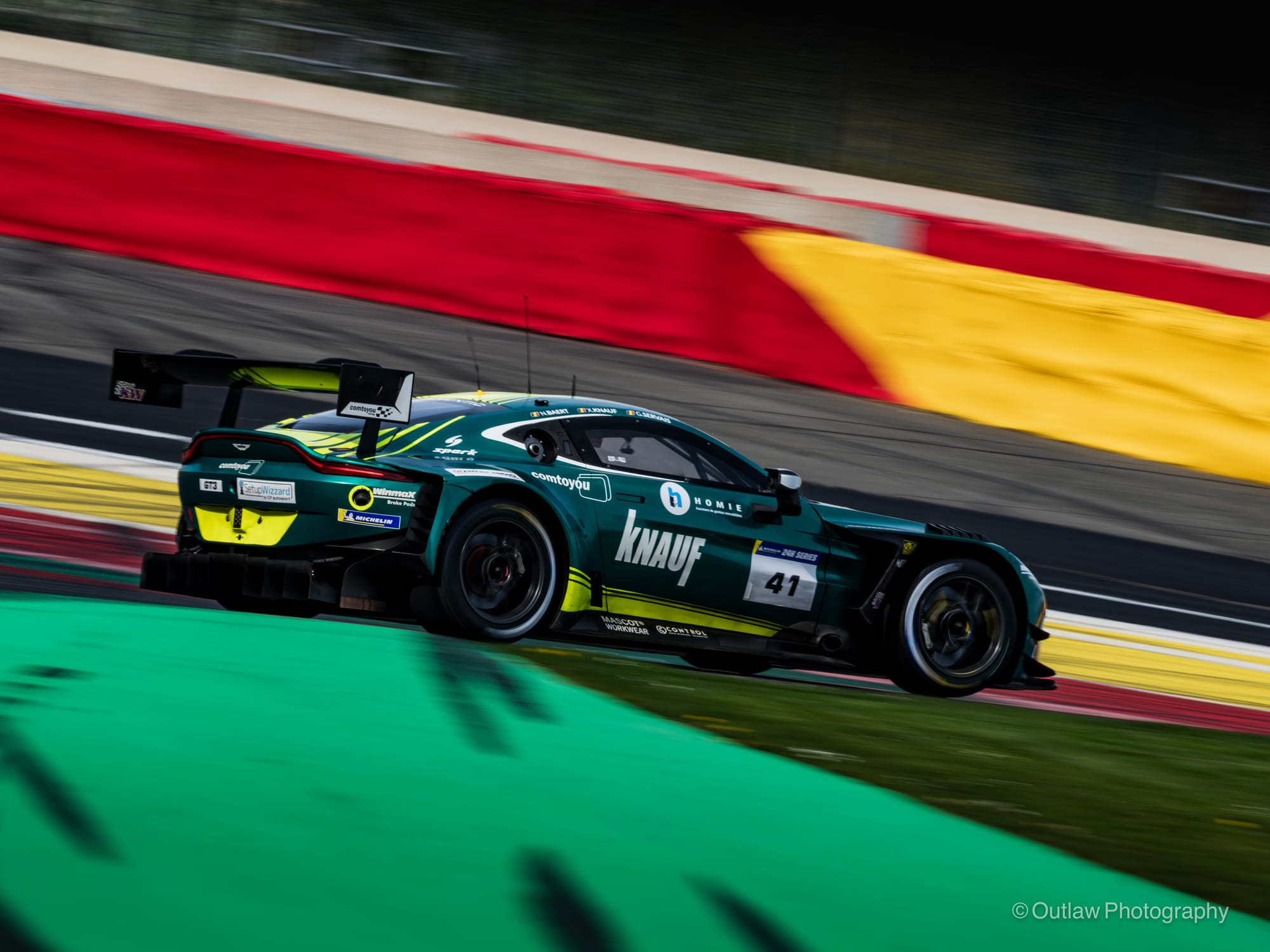
As the dust settled, Optimum Motorsport’s #77 McLaren emerged as the GT3 leader at the end of Saturday, ahead of Haas RT’s #2 Audi and Comtoyou Racing’s #41 Aston Martin. Across the classes, Proton Competition led GT3 Pro-Am, Haas RT topped GT3 Am, while QMMF by HRT Performance controlled the 992 category. The cars were placed into parc fermé overnight, setting the stage for an exciting start to Sunday.
Sunday began under a different tone. Light overnight rain left the track damp, creating uncertainty from the outset. A previous race was closely watched by the teams and most teams opted for slicks, committing early to track position.
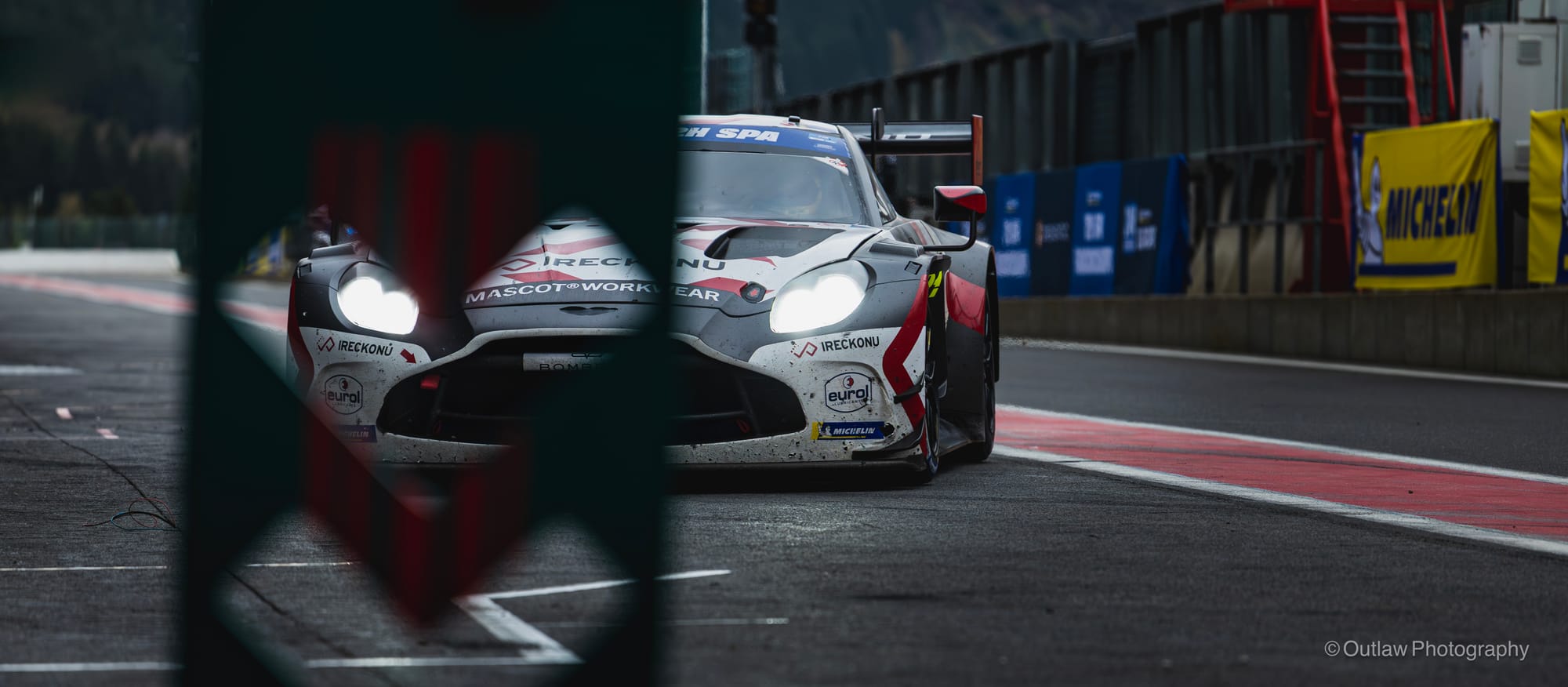
Even before the restart, drama struck. The #41 Comtoyou Aston Martin stopped on the start grid lap with an apparent electrical issue, immediately compromising one of the front runners.
At the front, Optimum initially controlled the restart, but within the first hour Haas RT had moved into the lead. That advantage didn’t last. Optimum soon reclaimed control, continuing a pattern that had defined the race.
Further back, incidents continued. Contact between the #702 Vortex and the #69 Continental Racing Audi at the Bus Stop scattered debris and triggered another Code 60, with both cars requiring recovery and concern for the Vortex driver who was out of radio communication with the pit crew. Teams immediately reacted, using the neutralised period to take advantage of limited refuelling allowances.
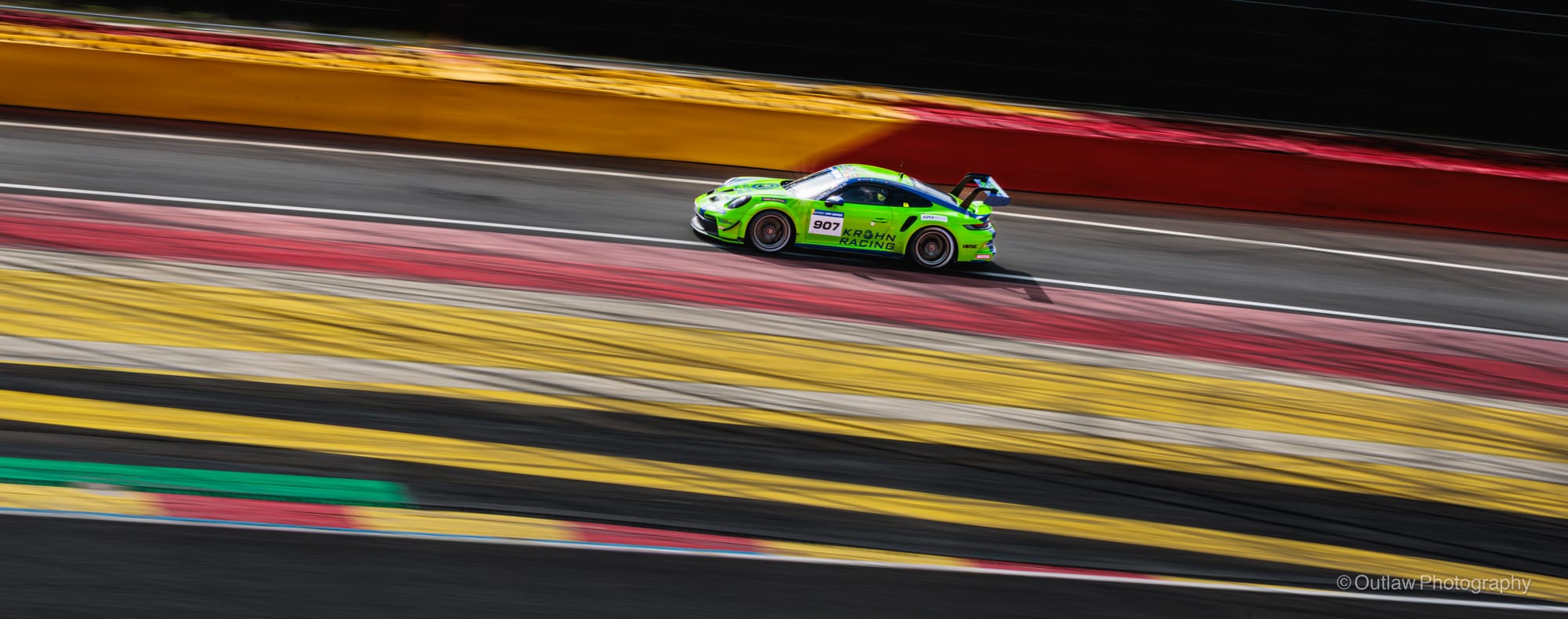
The #907 RPM Racing Porsche also found the gravel, recovering without major damage, but the frequency of errors was increasing. Sunday was becoming a test of limits, and drivers were increasingly stepping beyond them.
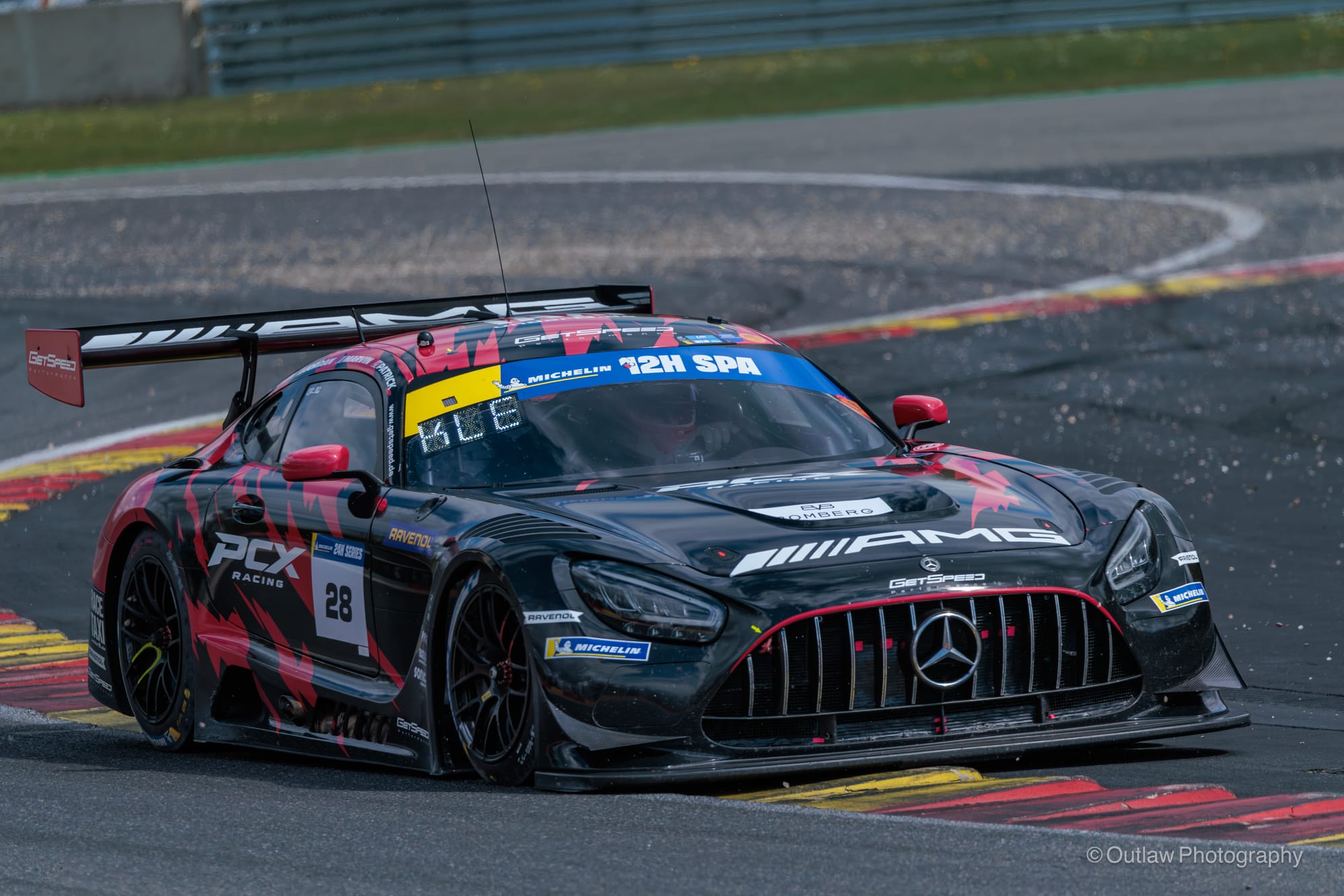
By the final four hours, Haas RT had once again taken the lead, with Optimum close behind. At the same time, the circuit itself was changing. Repeated offs, particularly at Bruxelles, dragged gravel back onto the racing line, reducing grip further and increasing the risk with every lap.
Then the weather returned.
With three and a half hours remaining, dark clouds gathered and rain began to fall. Optimum had just moved back into the lead as the conditions shifted, placing them in a critical position as strategy became decisive.
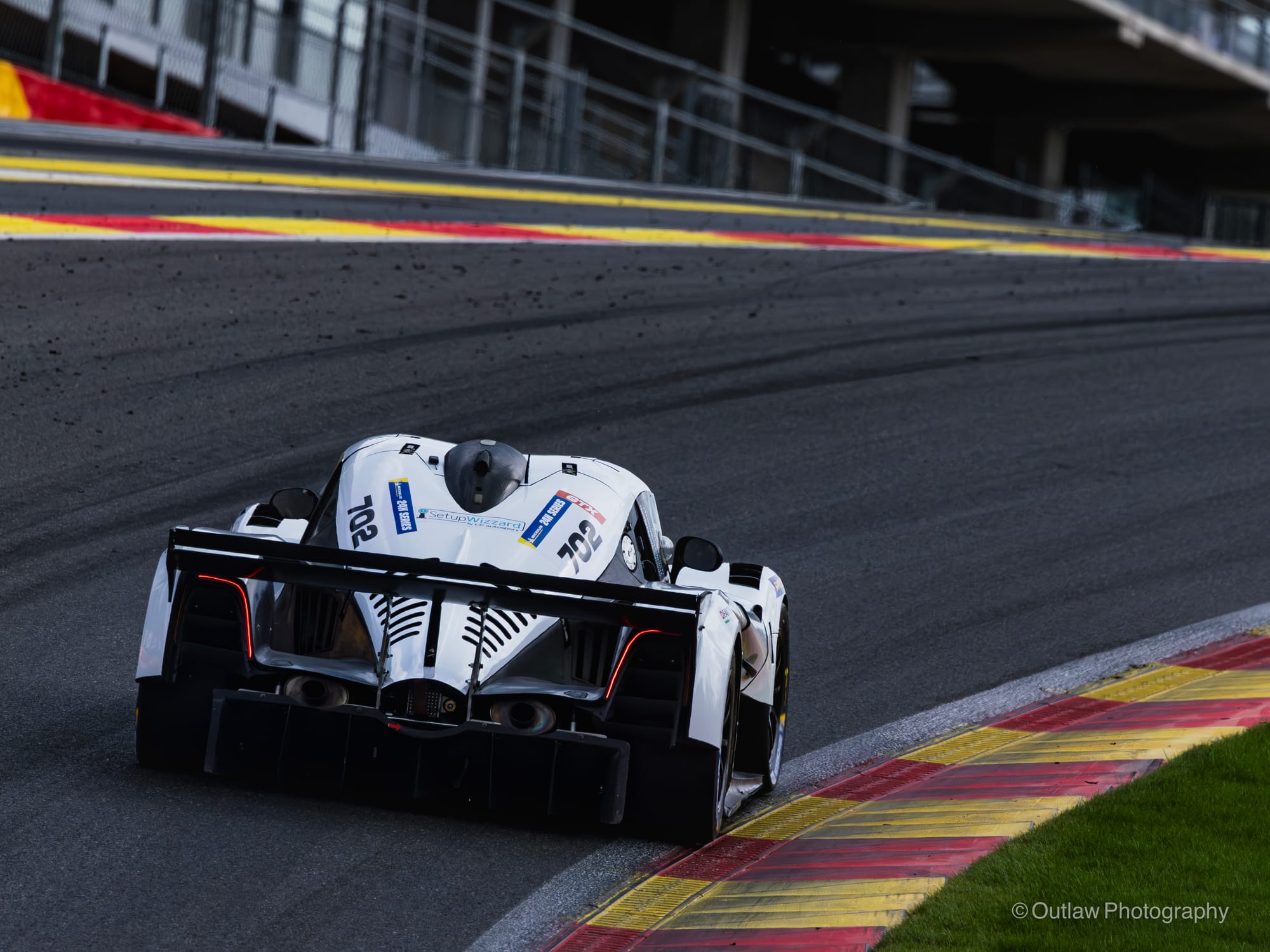
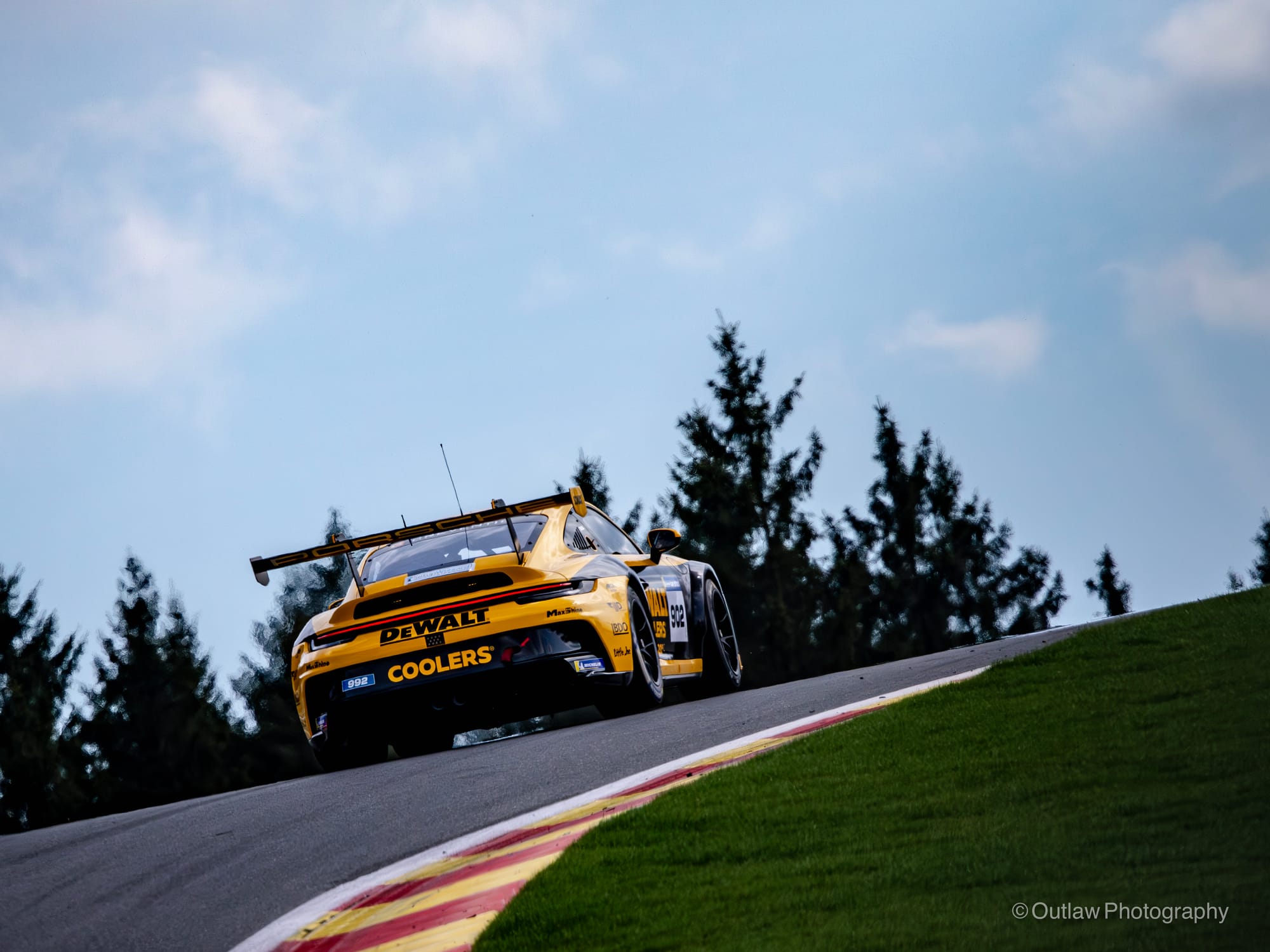
Rain intensified just over three hours from the end. Spray rose from the tyres, forcing teams into quick decisions. Some switched to wets, others held position, but as quickly as it arrived, the rain eased, leaving the circuit greasy and unpredictable.
The impact was immediate. The #21 Haas RT Audi lost control at Raidillon, sliding onto the grass and sustaining suspension damage before limping back to the pits.
As conditions fluctuated again, incidents continued. The #11 Hofor Racing Mercedes crashed at Les Combes but returned to the race after repairs, while the #888 Seblajoux Porsche lost a wheel and was forced to stop.
With under an hour remaining, Optimum still led, Haas RT close behind. Then, once again, the weather intervened.
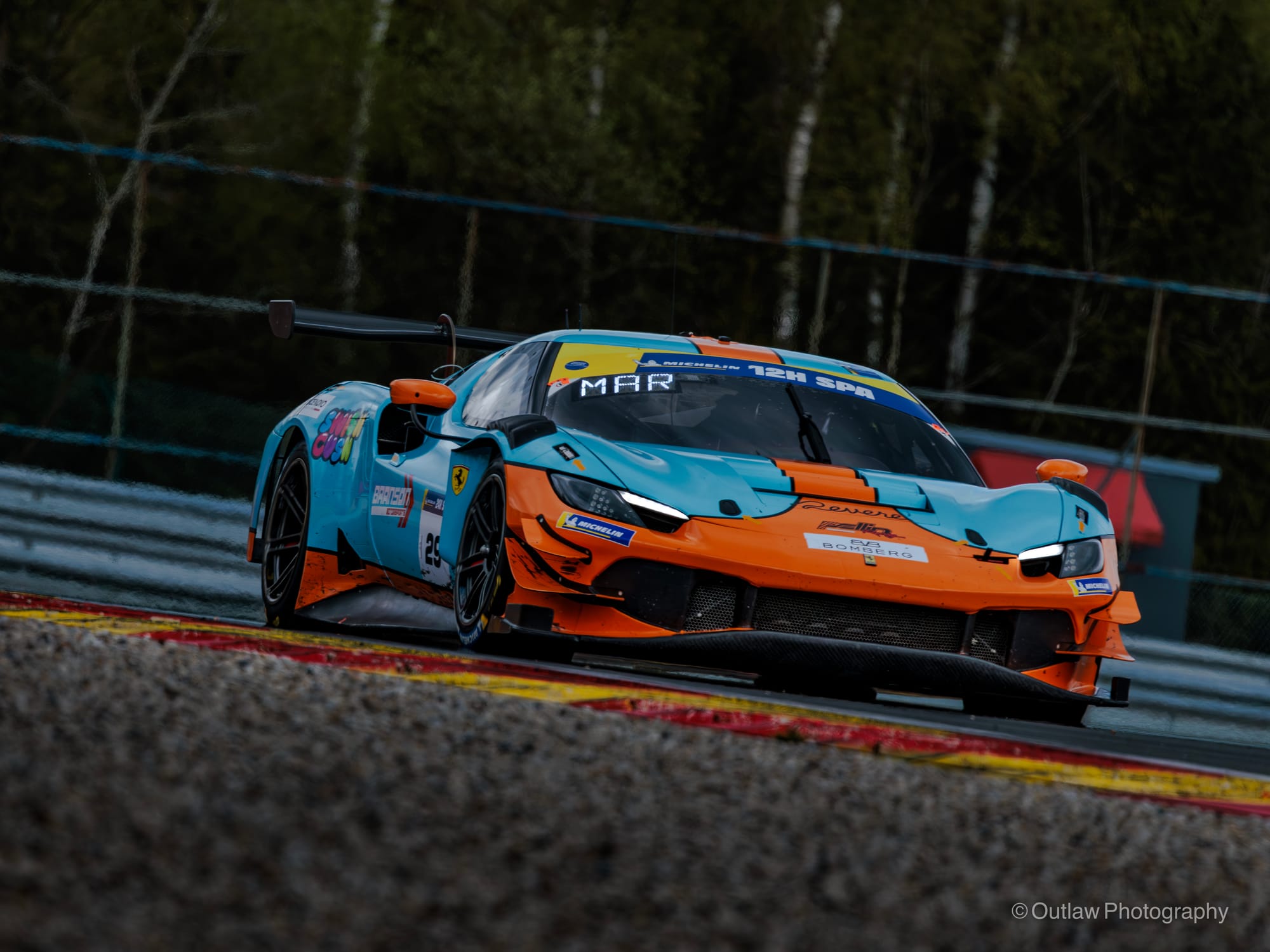
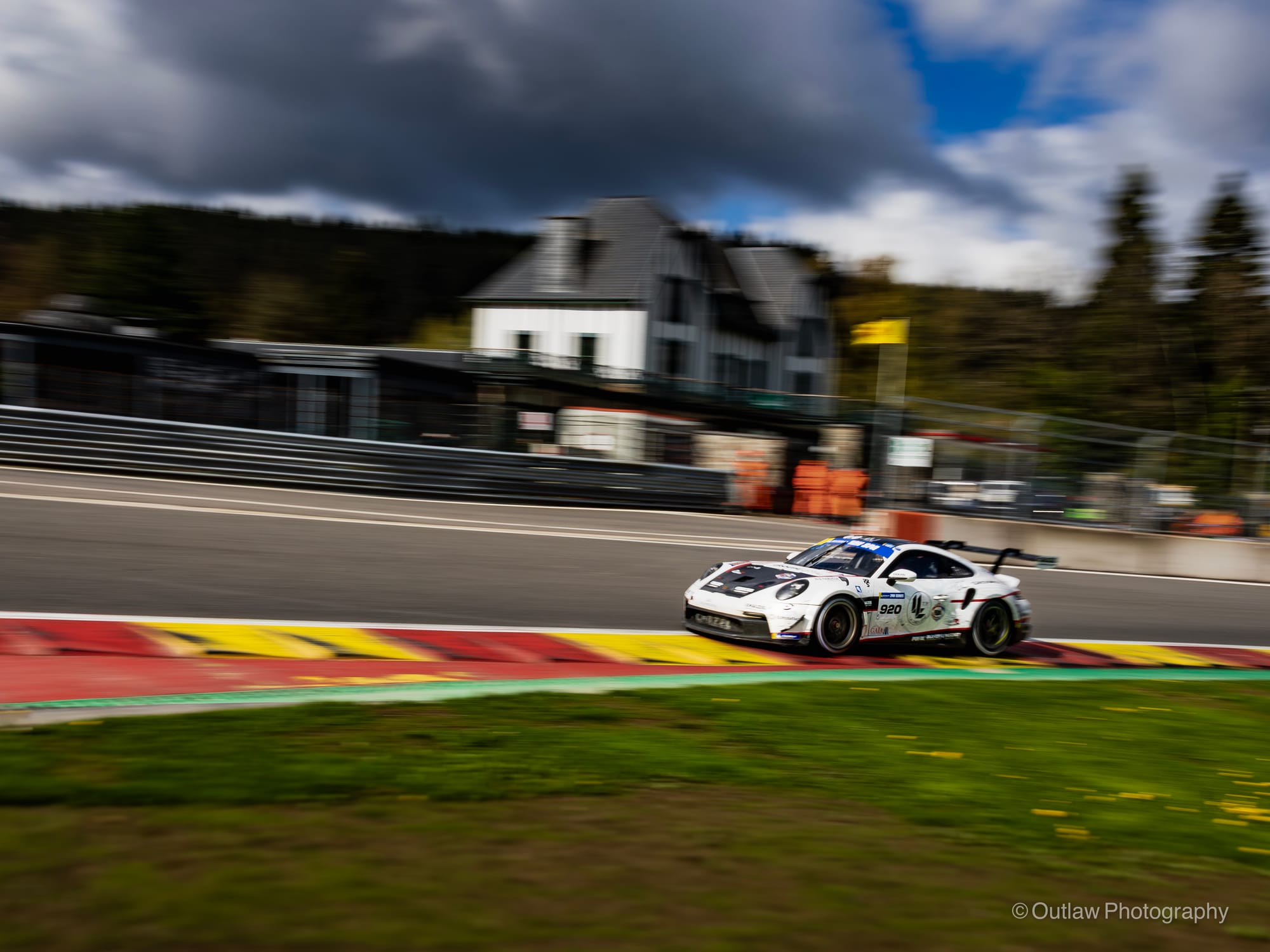
Heavy rain returned in the final 30 minutes, turning the closing phase into a fight for survival. The #93 Redant Racing car ran into the gravel at Blanchimont, while the #920 Chazel Technologie Porsche lost a likely podium finish after going off track.
In the final seven minutes, the race came alive. The top five cars were locked in a fierce battle, pushing hard despite the conditions. Yannick Redant stood out his Mercedes missing a headlight from earlier damage, driving aggressively and committing fully as positions were fought over in the closing laps.
At the front, however, control remained.
Optimum Motorsport’s #77 McLaren held on to take victory, capping off a race that had been built on sustained pace, consistency, and control across both Saturday and Sunday. While the order fluctuated throughout due to pit cycles and refuelling strategy, they remained a constant presence at the front, repeatedly returning to the lead and managing every phase of the race with confidence.
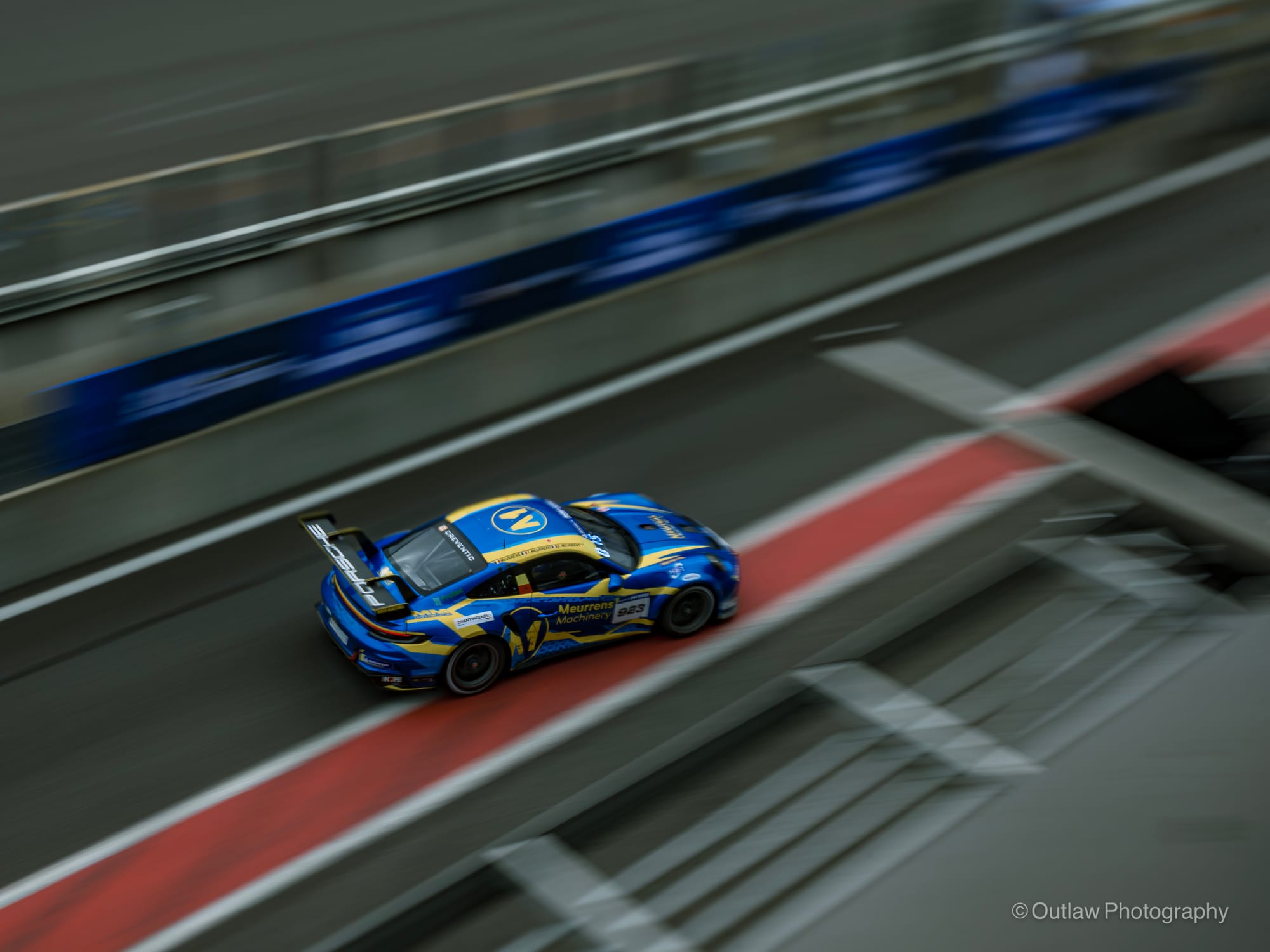
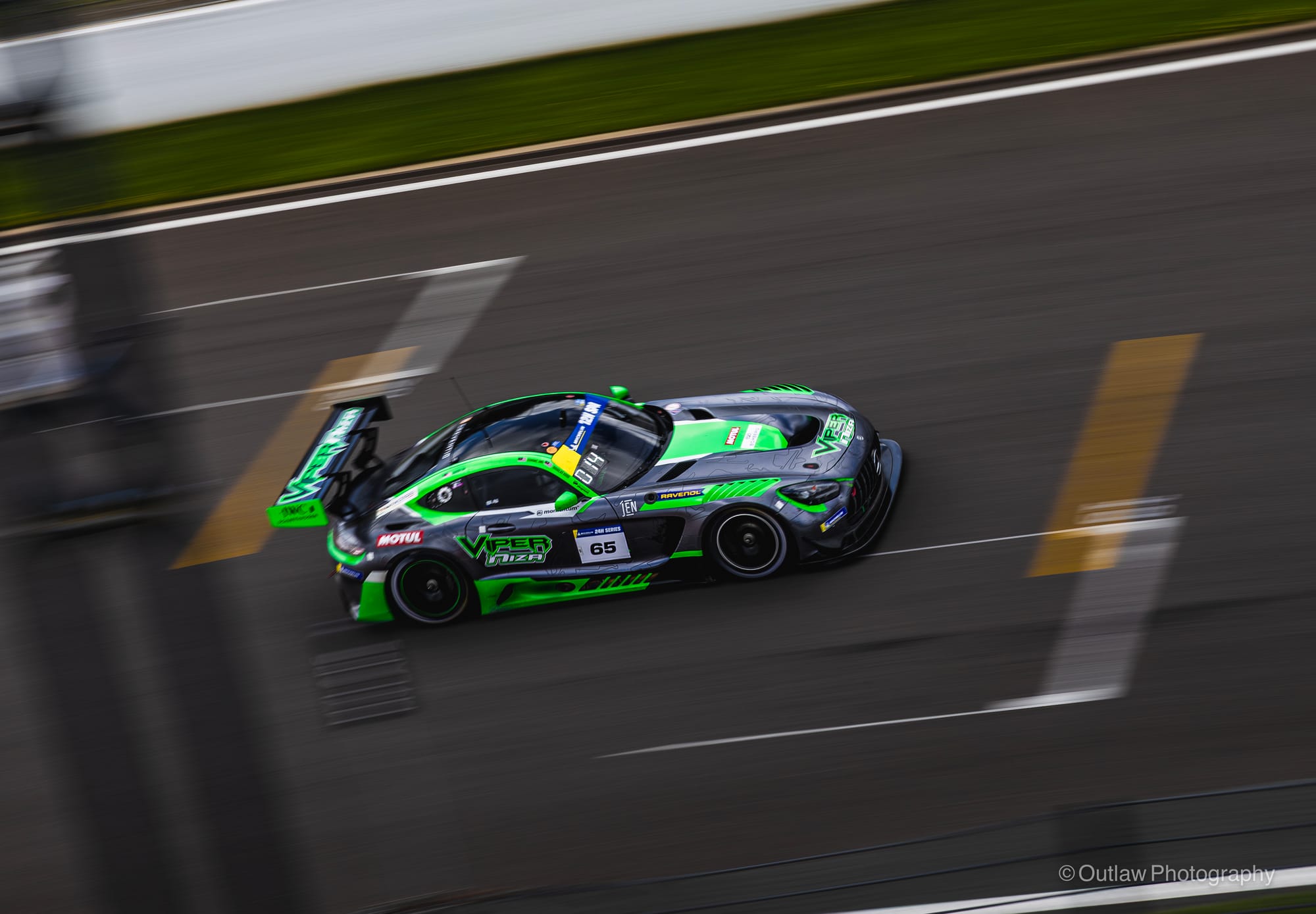
Haas RT’s #2 Audi R8 secured second after applying pressure throughout the final stages, while Getspeed Team’s #286 Mercedes-AMG completed the podium, capitalising on a race that rewarded discipline as much as speed.
Behind them, Proton Competition and Ajith Redant Racing rounded out the top five in a race that punished mistakes and rewarded those who could adapt.
It was a race that never truly settled. From dry control to repeated interruptions, from strategy to shifting weather, Spa delivered a contest defined by constant pressure.
And while many fought for position, reacted to change, or recovered from mistakes, Optimum Motorsport did something different. They controlled the race when it mattered, and when the conditions turned, they were already where they needed to be, they maintained a strong presence throughout the race to take ultimate victory.